Home · Clock Care
Clock Care · From the Bench
Regulating your pendulum clock.
Running a few minutes fast or slow each day? You can usually fix that yourself in a minute — no tools, no disassembly. Here’s how, in plain English, from our bench to your mantel.
The three rules
The rating nut is the little knurled nut just below the pendulum bob. That nut is your whole control panel.
- Right for faster, left for slower. Turning the nut right raises the bob (faster); left lowers it (slower).
- One full turn ≈ one minute per 24 hours. Start with small moves — a quarter or half turn goes a long way.
- Adjust in 24-hour steps. Set it against a reliable clock, wait a full day, then correct again. Repeat until it holds.
A note on patience: it takes a couple of days to dial a clock in, because you can only judge the rate over a full 24 hours. Resist the urge to over-correct.
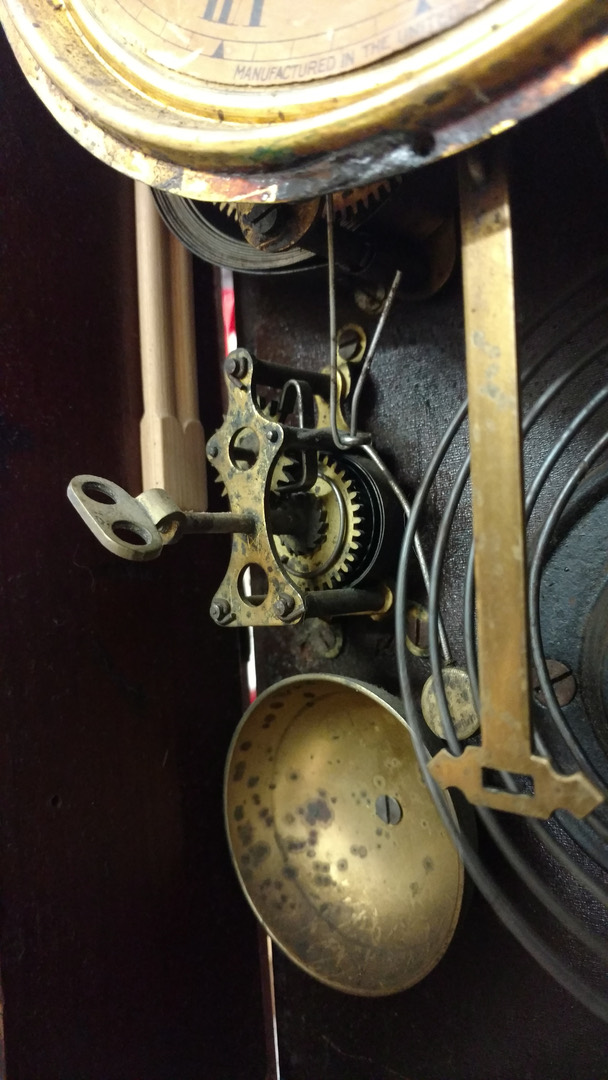
How often a clock wants attention
- Every 3 years — weight-driven clocks serviced
- Every 5 years — mainspring clocks oiled and serviced
- Every 25–30 years — a full overhaul
Common questions
Answered from the bench.
How do I make my clock run faster or slower?
Use the rating nut just below the pendulum bob. Turn it to the right and the clock runs faster; turn it to the left and it runs slower. The nut raises or lowers the bob, which changes the pendulum’s effective length.
How much does one turn change the time?
Roughly one full turn of the rating nut equals about one minute per 24 hours. Make small adjustments — a quarter or half turn is often plenty — and always judge the change over a full day.
How often should my antique clock be serviced?
As a rule of thumb: mainspring-driven clocks about every 5 years, weight-driven clocks about every 3 years, and a full overhaul roughly every 25–30 years. Regular light service is far cheaper than a movement that has run dry and worn its pivots.
Why did my clock suddenly start losing (or gaining) time?
Temperature, humidity, old oil and dirt in the movement all affect the rate. If regulating the pendulum no longer holds it in time, the movement is usually telling you it’s due for cleaning and service. That’s a good moment to get a free estimate.
Should I move a running grandfather clock myself?
Better not. Grandfather (hall) clocks and large wall clocks have weights, pendulums and delicate movements that don’t travel well. For those we do house calls across the Valley rather than have you risk the piece.
Regulated it and it still drifts?
That usually means it’s due for service. Bring it in, or we’ll come to it — free estimate either way.